Midlife crisis

The term is becoming more and more well-known and widespread. However, as in many cases, we come across many conflicting theories. The concept of the midlife crisis was developed by Elliott Jaques in 1965, and he applied it primarily to men. In the case of women, menopause, which indicates a change in biological processes, is a much clearer milestone, as it marks the end of the period of the ability to conceive. Unfortunately, women’s physical changes were blamed for men’s mood swings and, in many cases, even for leaving their entire structured existence and family.

 
pexels-photo-4098224
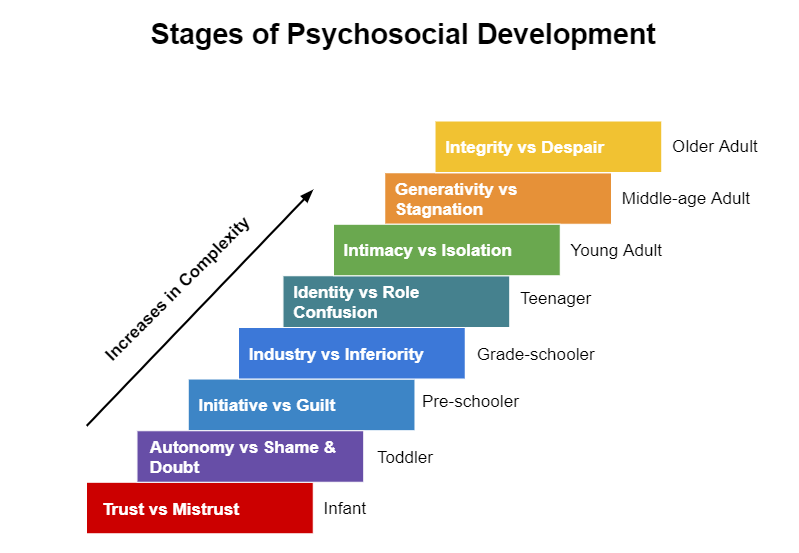
Another significant person is the famous psychologist Erik Erikson, well known for his life stage theory about going through 8 life stages. So, our development does not end with the end of adolescence, as was previously thought.
 
In the first stage, children bond with their parents deeply through attachment. In a healthy environment, babies develop a deep trust, and they’ll be able to build healthy, strong relationships in the future. This is the first year of their lives.
 
The second stage is the second year, when children start to develop their autonomy.
 
The third stage is the period between the age of 3-5 when the ability to take the initiative develops, and the sense of guilt and doubt appears. Children are able to create their rules and games.
 
The fourth period lasts from the age of six until puberty. Children understand how things function in this developmental period and the importance of organisational tasks.
stages of psychosocial development
The fifth period is the first period of crisis, the age of adolescence between the age of 12-16. This period brings confusion and physical and hormonal changes. Questioning parents’ control over them and setting boundaries is on one side. Meanwhile, relying the opinion of their peers on the other side. Most common questions: Who am I? What kind of person am I? Where do I belong?
 
The sixth period is young adulthood, about building our first serious relationship and ideas about what we want to do as a profession.
 
The seventh period is important for family formation and social and community cohesion. During these years, our family starts growing, our relationship with our partner is deeper, and we usually have achievements in our professional life as well. And around the age of 35-45 when people typically have a look at their milestones and achievements. Unfortunately, in Western societies, there is a massive expectation on individuals that they need to have children, a house, a car, high-paying job by this time. And at the same time, they also have their dreams and values they might put aside to achieve these pressured goals. The most frequently asked questions are: Who am I? What is the meaning of my life? Where am I? I have everything, so why am I not happy? At this point, most clients begin to deal with self-awareness and turn to themselves.
 
The eighth period is the period of fulfilment, the feeling of satisfaction with life, the conscious confrontation with death and the appearance of the associated fears.
 
Monthly group coaching event on this topic with anchoring strategies and solutions to overcome midlife crisis. 
 

Theme of March: Happiness

In March we are talking a lot about happiness and why is this so important lately? Who can we describe what is happyness? Who can we measure it?
1
 
Fifty or even a hundred years ago, happiness as a phenomenon was not the central question of life. Much more focus was on everyday living, raising children, religion, community involvement, and work. Roughly from the 1950s, the values and experiences of the individual became popular much more. Our lifespan is much longer than it was before and If we think about just relationships and marriage, we spend more time together and expect much more from these connections than before. We develop as a couple, and we grow in our personality, spiritually etc. In our individualist society, happiness is essential. Countless social media platforms and advertisements suggest the importance of feeling happy and shame on you if you’re not.
 
Hundreds of self-help books promise you 5-10 tips and ways of happiness. Like it would be a pill you can take or a button you push and that’s all: you are happy forever. But emotions do not like that. The first thing it is interesting to consider is what is the area we feel unhappy. Give this feeling other words: burnout, unmotivated, uninterested, low mood, disappointed, stressed etc. Let’s think about how long we’ve been feeling this way and when was the last time we were truly immaturely happy. What has changed in our lives since then, both negatively and positively?
 
My clients usually contact me with a topic centred around their happiness. For example, they no longer feel in flow in that position, in that company, as before. Sometimes they love their partner but feel disconnected and lack the energy and time to spend quality moments together.
 
Just a few questions to consider:
What feelings do you have?
How happy are you in general?
How often do you feel this way?
How happy are you on a scale from 1 to 10?
When was the last time you felt happy?
What are the things keep you away from feeling happy?
 
Tell me more details about your feelings now. Make a note for yourself.
 
If you wish to join us click on the link below or message me directly via email. 

Join us!

Are you enjoying reading these posts so far?
Would you like to engage a little bit more?
Why not join one of my groups and find more support and activities.
1
In February our theme is career and every aspect of it.
What will you get? 
– collected questions around a monthly theme
– short videos
– free group coaching sessions 
– a fantastic community
Hope see you soon!

Gamification

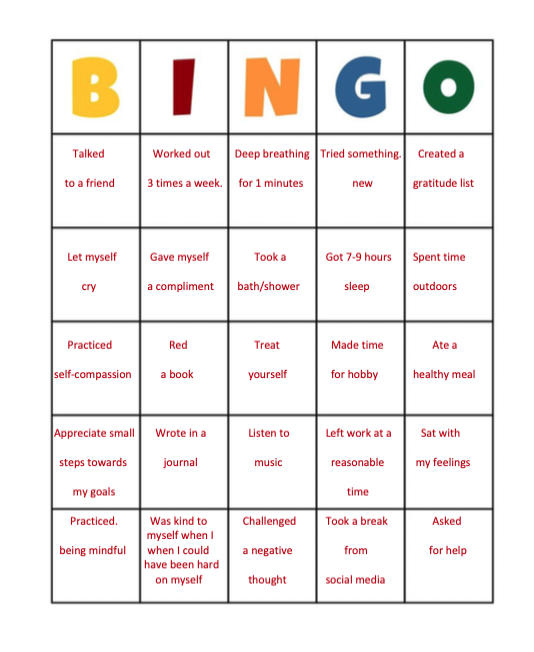
This month we’re focusing on self-care in my group. To support us, I’ve created a self-care bingo. The game’s purpose is regular bingo: mark off the square every time you complete an action on the board. Once you complete a line across, up and down, or diagonally, it’s a win! Award yourself with something nice that lifts your mood.

Screenshot 2022-08-23 at 08.38.35How is this helpful for self-care?

Self-care is something we think is a luxury, but it is essential. You can share from an empty bowl. You can’t spend quality time with your family or friends if your batteries need to be refilled. Maybe you want to be more resilient, relaxed, and spend more time with your loved ones. But you can’t just rebuild your habits from one day to another. Small steps are sustainable. The less is more. Every day focus on just one action on the board.

If you liked this and want to learn some new techniques, please join:

https://www.facebook.com/groups/5petalscoachingwitheva