
The term is becoming more and more well-known and widespread. However, as in many cases, we come across many conflicting theories. The concept of the midlife crisis was developed by Elliott Jaques in 1965, and he applied it primarily to men. In the case of women, menopause, which indicates a change in biological processes, is a much clearer milestone, as it marks the end of the period of the ability to conceive. Unfortunately, women’s physical changes were blamed for men’s mood swings and, in many cases, even for leaving their entire structured existence and family.

Another significant person is the famous psychologist Erik Erikson, well known for his life stage theory about going through 8 life stages. So, our development does not end with the end of adolescence, as was previously thought.
In the first stage, children bond with their parents deeply through attachment. In a healthy environment, babies develop a deep trust, and they’ll be able to build healthy, strong relationships in the future. This is the first year of their lives.
The second stage is the second year, when children start to develop their autonomy.
The third stage is the period between the age of 3-5 when the ability to take the initiative develops, and the sense of guilt and doubt appears. Children are able to create their rules and games.
The fourth period lasts from the age of six until puberty. Children understand how things function in this developmental period and the importance of organisational tasks.
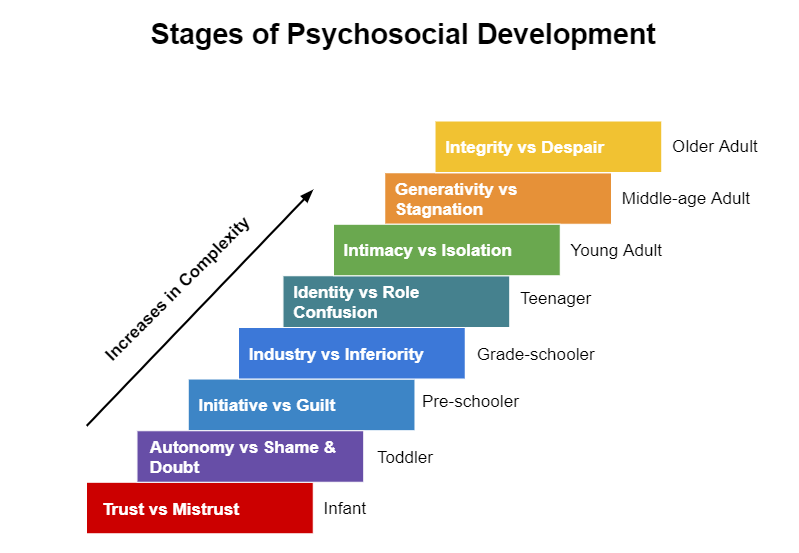
The fifth period is the first period of crisis, the age of adolescence between the age of 12-16. This period brings confusion and physical and hormonal changes. Questioning parents’ control over them and setting boundaries is on one side. Meanwhile, relying the opinion of their peers on the other side. Most common questions: Who am I? What kind of person am I? Where do I belong?
The sixth period is young adulthood, about building our first serious relationship and ideas about what we want to do as a profession.
The seventh period is important for family formation and social and community cohesion. During these years, our family starts growing, our relationship with our partner is deeper, and we usually have achievements in our professional life as well. And around the age of 35-45 when people typically have a look at their milestones and achievements. Unfortunately, in Western societies, there is a massive expectation on individuals that they need to have children, a house, a car, high-paying job by this time. And at the same time, they also have their dreams and values they might put aside to achieve these pressured goals. The most frequently asked questions are: Who am I? What is the meaning of my life? Where am I? I have everything, so why am I not happy? At this point, most clients begin to deal with self-awareness and turn to themselves.
The eighth period is the period of fulfilment, the feeling of satisfaction with life, the conscious confrontation with death and the appearance of the associated fears.
Monthly group coaching event on this topic with anchoring strategies and solutions to overcome midlife crisis.
 Eva Moricz Coaching