What Is Coaching Really About?

Coaching is a sacred space of transformation — a guided journey inward, where clarity, growth, and self-trust begin to bloom.

I use a variety of methods tailored to your needs and rhythm. Some are rooted in traditional coaching tools, while others draw from the intuitive arts — embodied awareness, emotional mapping, and energy-based reflection. My work blends the psychological and the mystical — because you are both, too.

We usually work together for 5 to 7 sessions, depending on the nature of your path. Sessions last 60–90 minutes, and take place online — via Microsoft Teams, Zoom, Skype, or even a quiet WhatsApp call. You choose what feels safe and right.

The first five sessions are usually spaced 7–10 days apart, giving time for reflection, integration, and the small “homework” tasks that gently open new doors in your daily life. The final session is a follow-up, held about four weeks after your fifth, to ground and bless the work we’ve done together.


🌿 The Journey Looks Like This:

1. Setting Your Intention
Most clients come to me not knowing exactly what they want to change — only that something inside is stirring. Or perhaps they want to change everything at once. That’s okay. Together, we’ll listen in, find the thread, and set one clear intention to guide our journey.
One program — one goal.
Remember: small shifts can give birth to powerful transformations. You don’t need to burn your life down. Sometimes, it starts with a whisper.

2. Gathering Inner Resources
You are not broken. You are not empty.
So many of us are trained to see our flaws first — to focus on what we lack, where we failed, what holds us back. In this part of the process, we rediscover your gifts, your strengths, your subtle powers.
What makes you strong in your softness? What have you already survived? What magic already lives in your bones?

3. Seeing With New Eyes
Now we look at your plan — your path — from all angles.
What pulls you forward? What holds you back? What stories do you carry that are no longer yours to tell? This is the shadow-work of coaching — gentle, honest, and necessary. When we understand our internal resistance, we stop fighting ourselves.
And when we stop fighting ourselves… we begin to move.

4. Choosing Your Path
There is never only one solution.
Together, we explore your options — not just what’s “logical,” but what resonates in your body, in your energy. This is the moment many feel a shift: more confidence, more grounded knowing.
You begin to trust your own rhythm. You begin to lead yourself.

5. Weaving the Threads
In our final working session, we create a map — simple, soulful, and doable. You leave with tools, rituals, and clear next steps, aligned to your strengths and values. We also speak openly about what might challenge you, and how to meet those moments with grace.
This work teaches you how to walk with yourself, gently but powerfully.

+1. Integration & Reflection
Four to six weeks after our fifth session, we meet once more.
We check in — where are you now? What has shifted? What has emerged?
This is where you begin to truly own the changes you’ve made. I hold space, reflect, and offer support for the next leg of your path.


🕯️ Coaching with Me Is…

… a practical journey with a mystical heart.
We speak plainly, we move gently, and we dive deep.
You will not be told who to be — you will be reminded of who you already are.

If you’re feeling the pull — that quiet inner nudge — this may be your sign.
Let’s begin when you’re ready. 🌑✨

📬 Message me for availability, or just to ask a question. I’d love to hear from you.

Theme of August: Responsibility

Taking responsibility is a crucial aspect of self-development that can significantly impact personal and professional growth. As a business coach, emphasizing responsibility as a developmental topic can empower your clients to take charge of their lives and achieve their goals. Many clients might hold onto thoughts of overwhelming work or family responsibilities, often using them as excuses for inaction or stagnation. However, it’s essential to highlight that self-sabotage often lies beneath these surface reasons.

Encouraging your clients to embrace responsibility involves guiding them to acknowledge their power to shape their circumstances actively. This means fostering a mindset that prioritizes ownership of one’s actions, choices, and outcomes. By doing so, individuals can break free from the constraints of victimhood and move towards a more proactive and positive approach to challenges.

Help your clients understand that accepting responsibility isn’t about shouldering all burdens alone, but rather recognizing their role in creating and shaping their reality. Encourage them to set realistic goals, take initiative, and make informed decisions. It’s also crucial to address the fear of failure or judgment that may be holding them back.

pexels-photo-8432431

In your coaching sessions, focus on building resilience and adaptability, as these qualities empower individuals to confront obstacles head-on. Additionally, promote self-reflection and accountability, guiding clients to learn from their mistakes and embrace growth opportunities.

In conclusion, responsibility is not just about fulfilling external obligations but is a potent force for personal development. By fostering a culture of responsibility, you can help your clients unleash their true potential and achieve lasting success in both their personal and professional lives.

What is inner focus?

Inner focus is the ability to direct and sustain one’s attention on the present moment, thoughts, emotions, or a specific task without being easily distracted by external factors. It involves turning inward, quieting the mind, and cultivating a state of heightened awareness and concentration. Maintaining inner focus is crucial for various aspects of life, including productivity, creativity, emotional well-being, and personal growth.

1

To maintain inner focus, practising self-awareness and developing skills such as mindfulness and meditation are important. Mindfulness allows individuals to observe their thoughts and sensations non-judgmentally, helping to anchor attention in the present moment. Regular meditation sessions enable individuals to train their minds to be more resilient to distractions and increase their capacity to sustain focus.

Creating an environment that minimises external distractions can also support inner focus. Removing clutter, turning off notifications, and finding a quiet space can help create a conducive atmosphere for concentration. Additionally, setting clear intentions, prioritising tasks, and managing time effectively contribute to maintaining inner focus.

Practising self-discipline, taking regular breaks, and engaging in self-care activities are vital to prevent mental fatigue and restoring inner focus. By staying present and accepting the current moment, individuals can reduce unnecessary worry and rumination, allowing them to fully immerse themselves in the task at hand.

Ultimately, maintaining inner focus requires commitment, patience, and consistent practice. Through conscious effort and a nurturing mindset, individuals can strengthen their ability to maintain their internal compass, leading to enhanced productivity, well-being, and personal development.

Joint my group on LinkedIn: https://www.linkedin.com/groups/12850186/

A little introduction

Five years ago, my family and I decided to start a new chapter in our lives and moved to Scotland. I began to work with independent clients in 2021 as a business and life coach. From April 2023, I’ve become a Gallup-Certified Cliftonstrengths Coach to support my clients to shift their attention from their weaknesses to their Talents and nurture them into Strengths. Previously, I worked for more than ten years in management and administrative positions in higher education and governmental organisations. And after a career change, I worked as a massage therapist for seven years in a spa, hotel and in my own business.

Add a heading-3
My CliftonStrengths top 5 are Empathy, Connectedness, Input, Belief, Responsibility. But what does it mean? It means I am an intuitive, counselling, inquisitive, dependable believer. During the sessions we are focusing on you and your ways, your solutions. We talk about your natural Talents and the investments you can take to transform them into Strengths. We talk about your weaknesses and blind spots that sabotage your success but with awareness you will be able to Name, Claim and Aim your Strengths and utilise them to thrive.

“Everybody needs a coach – someone to help them understand their talents and strengths, navigate their challenges, move forward when they are stuck, and reach their greatest potential.”

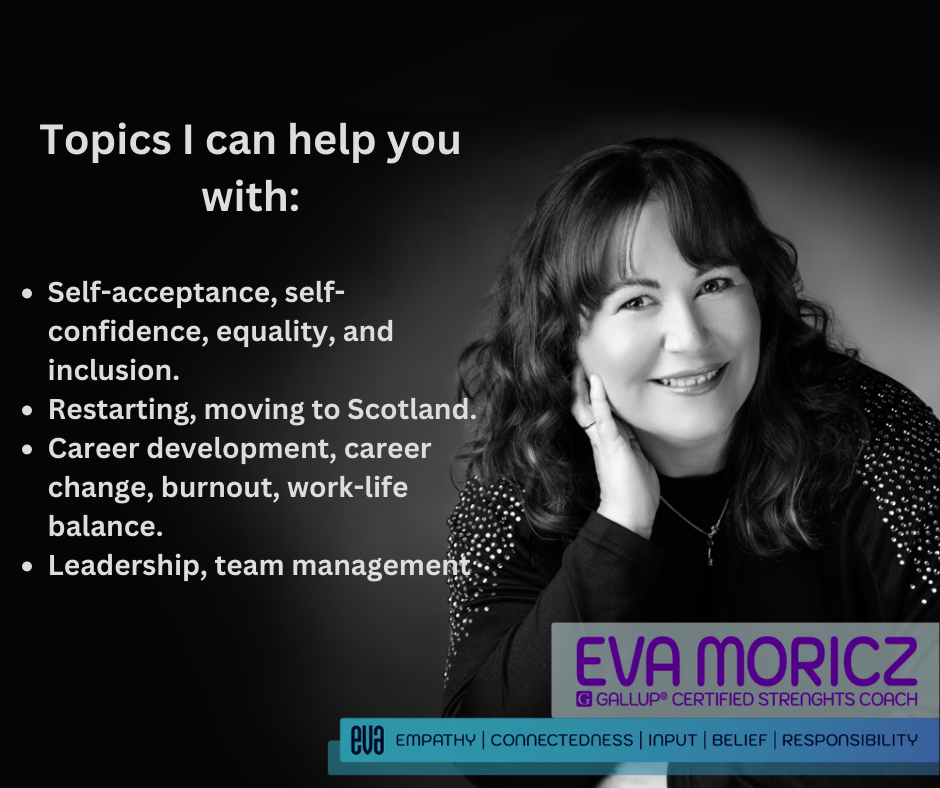
Topics I can help you with:

– I have been visually impaired since I was born; I also wrote my dissertation on equality law, so one of my main areas is self-acceptance, self-confidence, equality, and inclusion.

– Changing career paths, places of residence, and lifestyles could be challenging, but small steps and consistency can keep us on track. That is why restarting, moving to the UK, career development, career change, burnout, work-life balance, and starting a business are my other important areas.

The language of the sessions can be English or Hungarian.

In my program, I work with the CliftonStrengths Assessment by Gallup, which outlines your top talents, while your report features definitions of each of those talents that are specific to you. Discovering and owning your Strengths help you to understand yourself better and grow in the way that is the most effective and best for you. Learn more here

What is coaching?

Coaching is an ongoing, co-active professional relationship designed to guide you in creating a successful path. Each session has its own purpose, which supports you to look at your goal from a new perspective, map out the possibilities and finally take steps to achieve those goals.

Why choose me?

  • Because I experienced change in many levels of my life and have Empathy and Connectedness as my top strengths. With their help I have an open mind and an open heart to listen and help you through your journey.
  • We need to choose each other as equal partners. Please look around here, read my blog, or follow me on Facebook, Instagram or LinkedIn. If you feel that my words resonate with you please get in touch.
  • I’m a reliable, dedicated person, you can count on me. If I agree that we can work together this means I believe in you and I will work hard with you to achieve your goals. Have a look at the Testimonials page where you can read others’ experiences.

Be closer to your goal today than you were yesterday!

Book your appointment now here

Comparing CliftonStrengths with DiSC

In my previous Business Coaching course we were introduced DiSC assessment which is based on the four dimensions of behaviour: Dominance, Influence, Steadiness and Conscientious. And the goal of this assessment is to measure these behaviours. Though it is improtant to know that behaviour is only a segment of our personality.

In contrast, CliftonStrenghs Assessment categorise the 34 Signiture Talent Themes by gahtericoffee-2608864__340ng skills, abilites, knowledge, attitudes, and personality traits. “CliftonStrengths gives teams and individuals an opportunity to discover their natural patterns of thinking, feeling and behaving.” In addition, this assessment was originally designed for personal develpment combined with coaching.

What assessments do you prefer to use and why?

https://www.gallup.com/cliftonstrengths/en/249950/compare-disc-cliftonstrengths.aspx

Good news

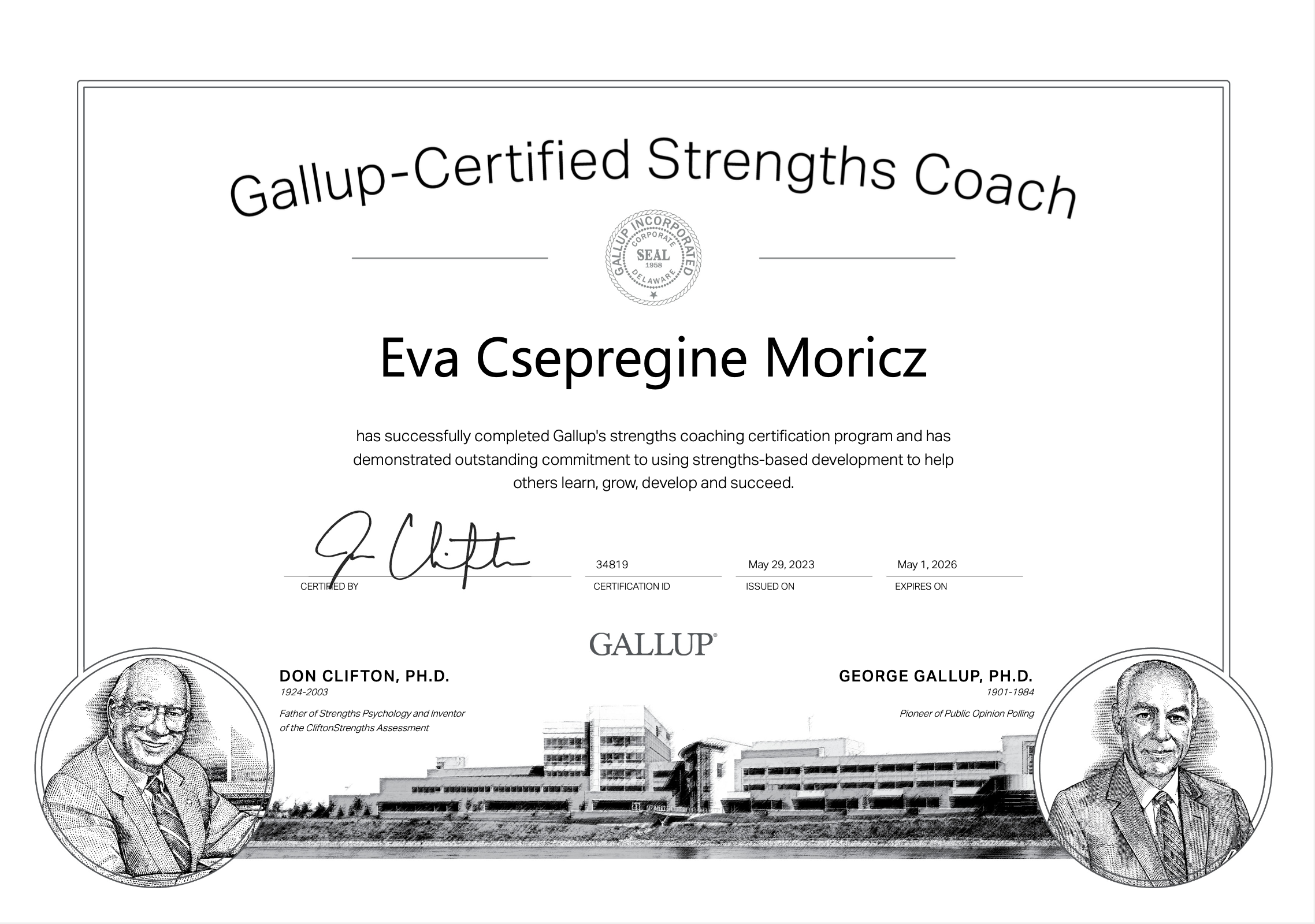
This is a big day for me; I’m officially a Gallup-Certified Strengths Coach! I used CliftonStrengths since 2020, but with this advanced course I received so many more resources and insights. Why is it amazing?
Because CliftonStrengths focuses on Strengths instead of weaknesses. And this attitude leads us to thrive, because we use those talents we’re naturally good at. If you want to lear more, please get in touch here.Screenshot 2023-05-30 at 19.19.56

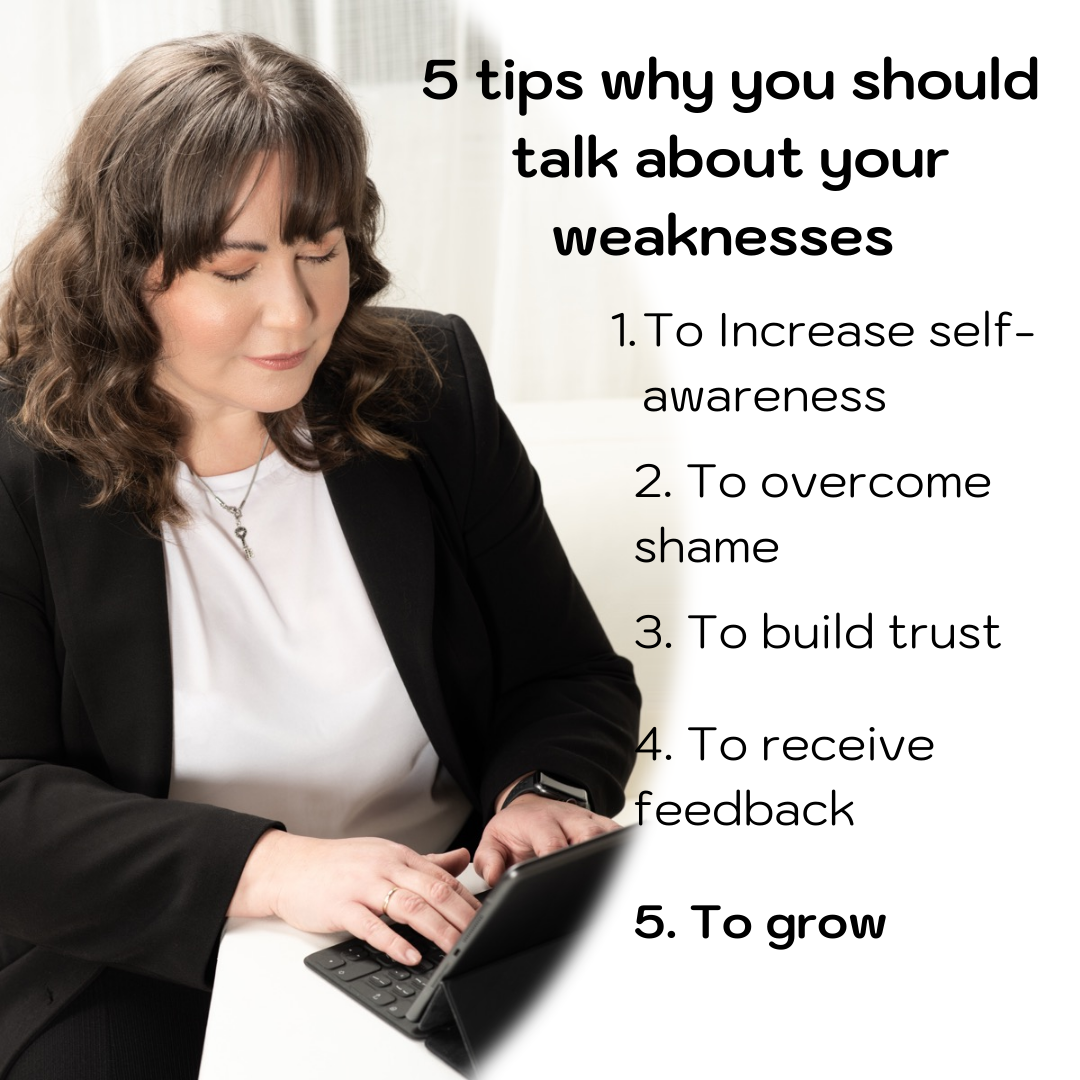
Why should we talk about our weaknesses Part 5 – Personal Growth

Talking about your weaknesses is a powerful step in personal growth and development. It allows you to create a roadmap for self-improvement, set goals, track progress, and ultimately become the best version of yourself.
When you talk about your weaknesses, you gain awareness of the areas in your life that require growth and improvement. This self-awareness is crucial because it provides the foundation for personal development. By acknowledging your weaknesses, you take an honest and introspective look at yourself, recognising the areas where you may be falling short or facing challenges.
5
Once you have identified your weaknesses, you can create a plan for personal growth. This plan involves setting specific goals that align with addressing and overcoming your weaknesses. These goals can be both short-term and long-term, providing you with a clear direction and purpose for your personal development journey.
You can seek guidance and support from others by talking about your weaknesses. This may involve seeking advice from mentors, coaches, or trusted friends who can offer insights and strategies for growth. Their perspectives and experiences can help you navigate challenges and provide a fresh perspective on your weaknesses. Having a support system is crucial in your growth journey as it keeps you accountable, motivated, and provides a sense of encouragement.
Tracking your progress is another vital aspect of personal growth. Regularly assessing and reflecting on your efforts and achievements can measure how far you have come in addressing your weaknesses. This tracking process helps you stay focused, celebrate small victories, and make necessary adjustments along the way. It allows you to see tangible evidence of your growth and reinforces your commitment to personal development.
Furthermore, talking about your weaknesses and actively working on them can boost your self-confidence and resilience. As you progress and overcome challenges, you develop a sense of accomplishment and belief in your ability to grow and improve. This newfound confidence spills over into other aspects of your life, empowering you to take on new challenges and opportunities with a positive mindset.
pexels-photo-11791008
Personal growth through addressing weaknesses also enhances your interpersonal skills and relationships. As you work on your weaknesses, you become more self-aware, empathetic, and open-minded. This enables you to build stronger connections with others, communicate more effectively, and handle conflicts in a constructive manner. Your personal growth positively impacts yourself and those around you, fostering healthier and more fulfilling relationships.
In conclusion, talking about your weaknesses is a catalyst for personal growth and development. By acknowledging your weaknesses and creating a roadmap for improvement, you set yourself on a path of self-discovery and self-improvement. Through goal-setting, seeking support, tracking progress, and building confidence, you become the best version of yourself. This personal growth journey not only enhances your individual well-being but also positively impacts your relationships and interactions with others. Embrace your weaknesses as opportunities for growth, and let them propel you towards a more fulfilling and meaningful life.

Why should we talk about our weaknesses Part 3 – To build trust

Sharing your weaknesses with others can be a powerful way to build trust and foster deeper connections. When you open up about your vulnerabilities, you demonstrate a level of honesty and authenticity that can create a safe space for others to do the same. This can lead to more meaningful and genuine relationships, both personally and professionally.

One of the primary benefits of sharing your weaknesses is that it can help to break down barriers between people. When you are open and honest about your own struggles, you demonstrate a willingness to be vulnerable and transparent with others. This can create a sense of mutual understanding and respect, which is essential to building trust.

Sharing your weaknesses can also create a sense of empathy and compassion. When you are open about your own struggles, you are better able to understand and empathize with the struggles of others. This can help to create a more supportive and caring environment where people feel comfortable seeking help and support when they need it.

Another benefit of sharing your weaknesses is that it can help to create a more inclusive and diverse environment. When people feel comfortable sharing their vulnerabilities, it can help to break down stereotypes and preconceptions. This can create a more open and accepting culture where people feel valued for their unique experiences and perspectives.

No alt text provided for this image

Sharing your weaknesses can also be a powerful tool for leadership. When leaders are open and transparent about their own struggles, it can create a sense of trust and respect with their team. This can help to build a strong and cohesive team where everyone feels valued and supported.

It is important to note that sharing your weaknesses is not always easy. It can be difficult to admit to your own vulnerabilities, especially in a culture that values strength and success. However, by being open and honest about your struggles, you demonstrate a level of courage and resilience that can inspire others.

When sharing your weaknesses, it is important to do so in a safe and supportive environment. Choose people whom you trust and who have demonstrated a level of empathy and understanding in the past. It can also be helpful to start with smaller disclosures and build up to more significant ones over time.

In conclusion, sharing your weaknesses with others can be a powerful tool for building trust and fostering deeper connections. By demonstrating a willingness to be vulnerable and transparent, you create a safe space for others to do the same. This can lead to more meaningful and authentic relationships, both personally and professionally. Sharing your weaknesses can also create a sense of empathy and compassion, build more inclusive and diverse environments, and be a powerful tool for leadership. While it may not always be easy, sharing your weaknesses is an essential part of building trust and creating more meaningful relationships with others.

Only 4 days

Happy Monday Everyone,

My name is Eva I’m a life and business coach, and I provide coaching for busy parents online. This month I’m launching a 3-week program for newcomers or those who lack confidence speaking in English. When I arrived here five years ago, I remember how my hand shook every time I had to make a phone call. The purpose of this workshop is to make this process easier for others. This first pilot workshop is only for six people to ensure a safe and supportive environment.

nb_EMoricz-5318_1200

If you know anyone who might benefit from this program, please share. I always reserve one space for someone who can’t afford coaching at the moment.

Dare to speak / Confidently in English Program

❓Are you a newcomer in Scotland and want to build a new home?

❓Do you speak English but lack the confidence to start a discussion?

❓Are you preparing for a job interview?

❓Would you like to boost your self-awareness and take action for your self-development?

❓Do you want to be more confident speaking English with your friends or colleagues?

❓Do you want to grow your comfort zone and make connections?

⁉️What if I tell you that you can practice it in a supportive, fun environment while receiving tips and tools about self-development and career growth?

If you say yes to any of these questions, you can grab your ticket and let’s get started.

https://www.eventbrite.co.uk/e/confidently-in-english-online-group-coaching-tickets-595220429327

Theme of March: Happiness

In March we are talking a lot about happiness and why is this so important lately? Who can we describe what is happyness? Who can we measure it?
1
 
Fifty or even a hundred years ago, happiness as a phenomenon was not the central question of life. Much more focus was on everyday living, raising children, religion, community involvement, and work. Roughly from the 1950s, the values and experiences of the individual became popular much more. Our lifespan is much longer than it was before and If we think about just relationships and marriage, we spend more time together and expect much more from these connections than before. We develop as a couple, and we grow in our personality, spiritually etc. In our individualist society, happiness is essential. Countless social media platforms and advertisements suggest the importance of feeling happy and shame on you if you’re not.
 
Hundreds of self-help books promise you 5-10 tips and ways of happiness. Like it would be a pill you can take or a button you push and that’s all: you are happy forever. But emotions do not like that. The first thing it is interesting to consider is what is the area we feel unhappy. Give this feeling other words: burnout, unmotivated, uninterested, low mood, disappointed, stressed etc. Let’s think about how long we’ve been feeling this way and when was the last time we were truly immaturely happy. What has changed in our lives since then, both negatively and positively?
 
My clients usually contact me with a topic centred around their happiness. For example, they no longer feel in flow in that position, in that company, as before. Sometimes they love their partner but feel disconnected and lack the energy and time to spend quality moments together.
 
Just a few questions to consider:
What feelings do you have?
How happy are you in general?
How often do you feel this way?
How happy are you on a scale from 1 to 10?
When was the last time you felt happy?
What are the things keep you away from feeling happy?
 
Tell me more details about your feelings now. Make a note for yourself.
 
If you wish to join us click on the link below or message me directly via email.