Welcome to Mystweld: Your Journey Beyond Ordinary Coaching

🌟 Welcome to Mystweld: Your Journey Beyond Ordinary Coaching 🌟

Are you ready to embark on a coaching experience like no other? Say hello to Mystweld, a revolutionary approach to life and business coaching that transcends traditional boundaries.

Unknown-5

🌐 Unveiling Mystweld: A World of Transformation 🌐

Mystweld isn’t just a coaching program – it’s an immersive journey through a multidimensional world of growth and introspection. Imagine stepping into a realm where seven distinctive dimensions mirror the diverse aspects of human experience, emotion, and progress.

How Mystweld Differs

🌈 Personal Growth Beyond Limits: Mystweld takes you beyond the conventional coaching software by inviting you to explore realms like Elendore, Umbrawood, Shriek Hollow, and more. Each realm offers a unique backdrop for your transformational journey.

🌟 Storytelling for Empowerment: Mystweld leverages the power of storytelling to inspire and empower. As a life and business coach, you can use the rich narratives of these realms to guide your clients towards overcoming challenges, embracing change, and unleashing their potential.

🌌 Tailored for Every Need: Whether you’re guiding individuals seeking personal growth or entrepreneurs navigating complex business landscapes, Mystweld’s diverse realms offer lessons in leadership, resilience, innovation, and emotional intelligence.

Unknown-3

🚀 Elevate Your Coaching Game: With Mystweld, you’re not just coaching – you’re embarking on an adventure. Your clients will delve into vivid worlds that mirror their struggles and aspirations, igniting meaningful conversations and breakthroughs.

🔗 Seamless Integration: Mystweld seamlessly integrates into your coaching practice. Use it as a tool to foster connection, facilitate deep conversations, and spark personal and professional development.

🔮 Your Portal to Possibility: Mystweld isn’t just a coaching tool; it’s a portal to possibility. It transforms coaching sessions into journeys of self-discovery, helping your clients rewrite their stories and create their own destinies.

🌐 Join the Mystweld Movement Today! 🌐

Are you ready to revolutionize your coaching practice? Embrace a world where growth knows no bounds, where imagination fuels transformation, and where coaching becomes an immersive journey. Welcome to Mystweld – where coaching meets enchantment, and possibilities are limitless.

🔗 Experience Mystweld Now 🔗

Embark on an extraordinary coaching journey that transcends boundaries and unlocks untapped potential. Join us in Mystweld’s realm and lead your clients to a future they’ve only dreamt of.

[Get Started

Unleash the power of Mystweld and transform lives today!

Things worth volunteering for:

  1. the great community: many nice people driven to help others.
  2. helping others: living my whole life as a visually impaired – I have to say – yes, you have to learn how to help. Because we are not born with this ability, we must learn to ask questions and listen to the answers.
  3. learning: as my previous point already indicated, openness to new things and the ability to learn are essential. However, many things can be learned while volunteering. With the Thornton Rose RDA, we learn about different disabilities, mental illnesses, and conditions. The other important part of our journey is understanding horses’ nature and how to care for them properly.

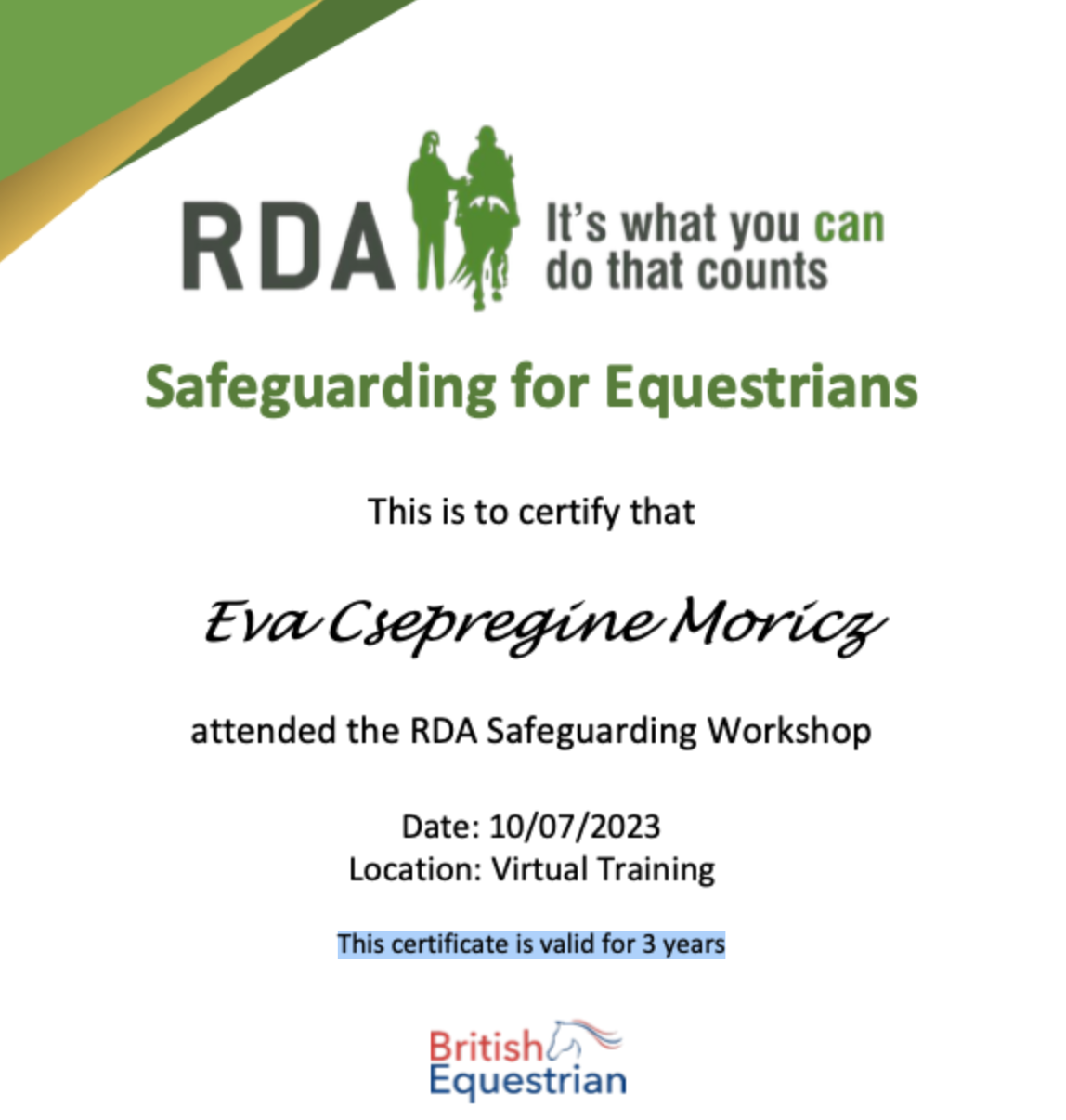
Here are my two most recent certifications from volunteering with RDA.Screenshot 2023-07-19 at 10.16.20Screenshot 2023-07-19 at 10.15.53

What is inner focus?

Inner focus is the ability to direct and sustain one’s attention on the present moment, thoughts, emotions, or a specific task without being easily distracted by external factors. It involves turning inward, quieting the mind, and cultivating a state of heightened awareness and concentration. Maintaining inner focus is crucial for various aspects of life, including productivity, creativity, emotional well-being, and personal growth.

1

To maintain inner focus, practising self-awareness and developing skills such as mindfulness and meditation are important. Mindfulness allows individuals to observe their thoughts and sensations non-judgmentally, helping to anchor attention in the present moment. Regular meditation sessions enable individuals to train their minds to be more resilient to distractions and increase their capacity to sustain focus.

Creating an environment that minimises external distractions can also support inner focus. Removing clutter, turning off notifications, and finding a quiet space can help create a conducive atmosphere for concentration. Additionally, setting clear intentions, prioritising tasks, and managing time effectively contribute to maintaining inner focus.

Practising self-discipline, taking regular breaks, and engaging in self-care activities are vital to prevent mental fatigue and restoring inner focus. By staying present and accepting the current moment, individuals can reduce unnecessary worry and rumination, allowing them to fully immerse themselves in the task at hand.

Ultimately, maintaining inner focus requires commitment, patience, and consistent practice. Through conscious effort and a nurturing mindset, individuals can strengthen their ability to maintain their internal compass, leading to enhanced productivity, well-being, and personal development.

Joint my group on LinkedIn: https://www.linkedin.com/groups/12850186/

A little introduction

Five years ago, my family and I decided to start a new chapter in our lives and moved to Scotland. I began to work with independent clients in 2021 as a business and life coach. From April 2023, I’ve become a Gallup-Certified Cliftonstrengths Coach to support my clients to shift their attention from their weaknesses to their Talents and nurture them into Strengths. Previously, I worked for more than ten years in management and administrative positions in higher education and governmental organisations. And after a career change, I worked as a massage therapist for seven years in a spa, hotel and in my own business.

Add a heading-3
My CliftonStrengths top 5 are Empathy, Connectedness, Input, Belief, Responsibility. But what does it mean? It means I am an intuitive, counselling, inquisitive, dependable believer. During the sessions we are focusing on you and your ways, your solutions. We talk about your natural Talents and the investments you can take to transform them into Strengths. We talk about your weaknesses and blind spots that sabotage your success but with awareness you will be able to Name, Claim and Aim your Strengths and utilise them to thrive.

“Everybody needs a coach – someone to help them understand their talents and strengths, navigate their challenges, move forward when they are stuck, and reach their greatest potential.”

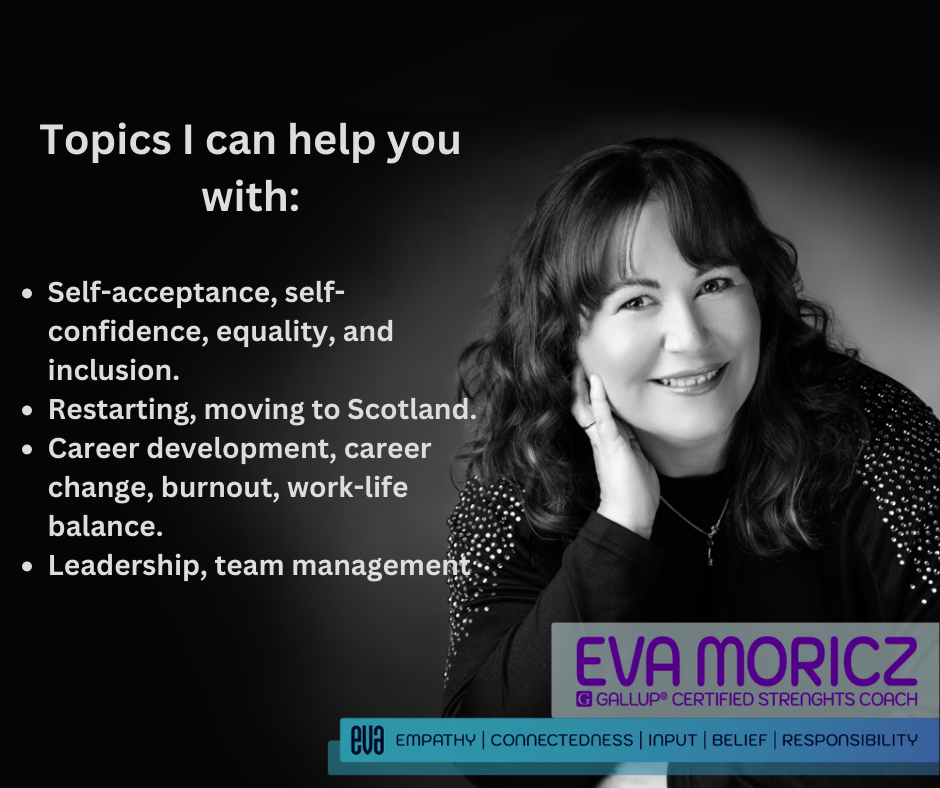
Topics I can help you with:

– I have been visually impaired since I was born; I also wrote my dissertation on equality law, so one of my main areas is self-acceptance, self-confidence, equality, and inclusion.

– Changing career paths, places of residence, and lifestyles could be challenging, but small steps and consistency can keep us on track. That is why restarting, moving to the UK, career development, career change, burnout, work-life balance, and starting a business are my other important areas.

The language of the sessions can be English or Hungarian.

In my program, I work with the CliftonStrengths Assessment by Gallup, which outlines your top talents, while your report features definitions of each of those talents that are specific to you. Discovering and owning your Strengths help you to understand yourself better and grow in the way that is the most effective and best for you. Learn more here

What is coaching?

Coaching is an ongoing, co-active professional relationship designed to guide you in creating a successful path. Each session has its own purpose, which supports you to look at your goal from a new perspective, map out the possibilities and finally take steps to achieve those goals.

Why choose me?

  • Because I experienced change in many levels of my life and have Empathy and Connectedness as my top strengths. With their help I have an open mind and an open heart to listen and help you through your journey.
  • We need to choose each other as equal partners. Please look around here, read my blog, or follow me on Facebook, Instagram or LinkedIn. If you feel that my words resonate with you please get in touch.
  • I’m a reliable, dedicated person, you can count on me. If I agree that we can work together this means I believe in you and I will work hard with you to achieve your goals. Have a look at the Testimonials page where you can read others’ experiences.

Be closer to your goal today than you were yesterday!

Book your appointment now here

How to overcome imposter syndrome?

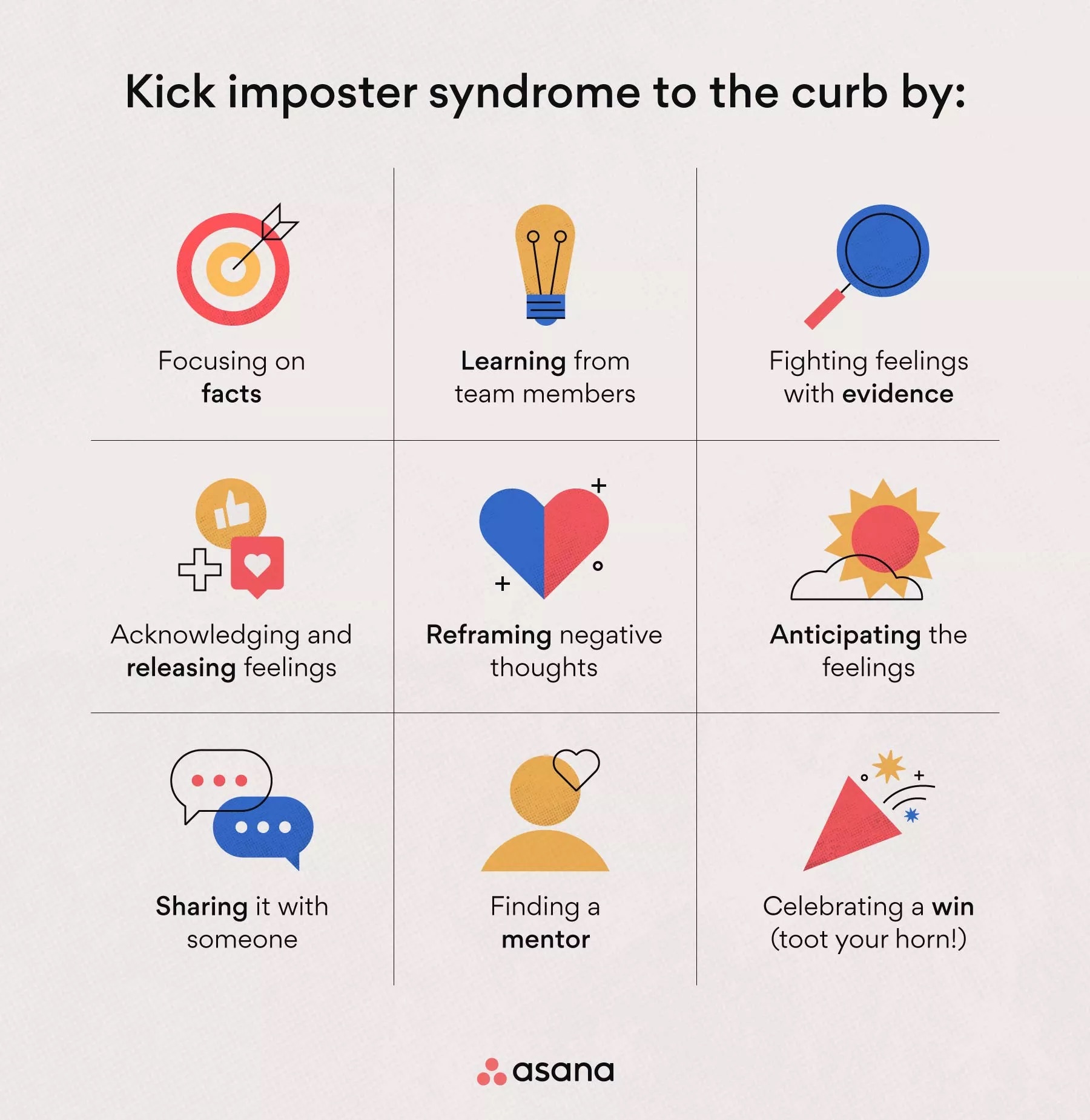
Overcoming imposter syndrome is a journey that involves self-reflection, mindset shifts, and practical strategies. Here are some approaches to help:

  1. Recognise and acknowledge your achievements: Take the time to reflect on your accomplishments and credit yourself for your hard work and skills. Keep a record of positive feedback, compliments, and achievements to remind yourself of your abilities.

inline-imposter-syndrome-2-2x

  1. Challenge negative self-talk: Pay attention to the negative thoughts and self-doubt that arise in your mind. Ask yourself if there is any evidence supporting these thoughts and challenge them with more rational and realistic perspectives. Practice self-compassion and remind yourself that everyone makes mistakes and experiences self-doubt at times.
  2. Seek support and share your feelings: Talk to trusted friends, mentors, or colleagues about your experiences with imposter syndrome. Sharing your feelings and concerns with others can provide reassurance and help you gain perspective. You may discover that many people can relate to your struggles.
  3. Set realistic expectations: Perfectionism often fuels imposter syndrome. Understand that it is normal to have areas for growth and improvement. Set realistic goals and focus on progress rather than aiming for unattainable perfection.
  4. Embrace learning and growth: Shift your mindset from a fixed mindset to a growth mindset. Embrace challenges as opportunities for learning and growth rather than fearing failure. View setbacks as valuable lessons and chances to improve.
  5. Celebrate small victories: Acknowledge and celebrate even the smallest achievements along your journey. This practice reinforces positive self-perception and builds confidence.

2

  1. Seek professional help if needed: If imposter syndrome significantly impacts your well-being and hinders your personal or professional life, consider seeking therapy, coaching or counselling. A mental health professional can help you explore underlying beliefs and develop coping strategies tailored to your needs.

Remember that overcoming imposter syndrome is a process that takes time and effort. Be patient with yourself and celebrate the progress you make along the way. With self-awareness, support, and a shift in mindset, you can gradually overcome imposter syndrome and embrace your true worth and capabilities.

Comparing CliftonStrengths with DiSC

In my previous Business Coaching course we were introduced DiSC assessment which is based on the four dimensions of behaviour: Dominance, Influence, Steadiness and Conscientious. And the goal of this assessment is to measure these behaviours. Though it is improtant to know that behaviour is only a segment of our personality.

In contrast, CliftonStrenghs Assessment categorise the 34 Signiture Talent Themes by gahtericoffee-2608864__340ng skills, abilites, knowledge, attitudes, and personality traits. “CliftonStrengths gives teams and individuals an opportunity to discover their natural patterns of thinking, feeling and behaving.” In addition, this assessment was originally designed for personal develpment combined with coaching.

What assessments do you prefer to use and why?

https://www.gallup.com/cliftonstrengths/en/249950/compare-disc-cliftonstrengths.aspx

Good news

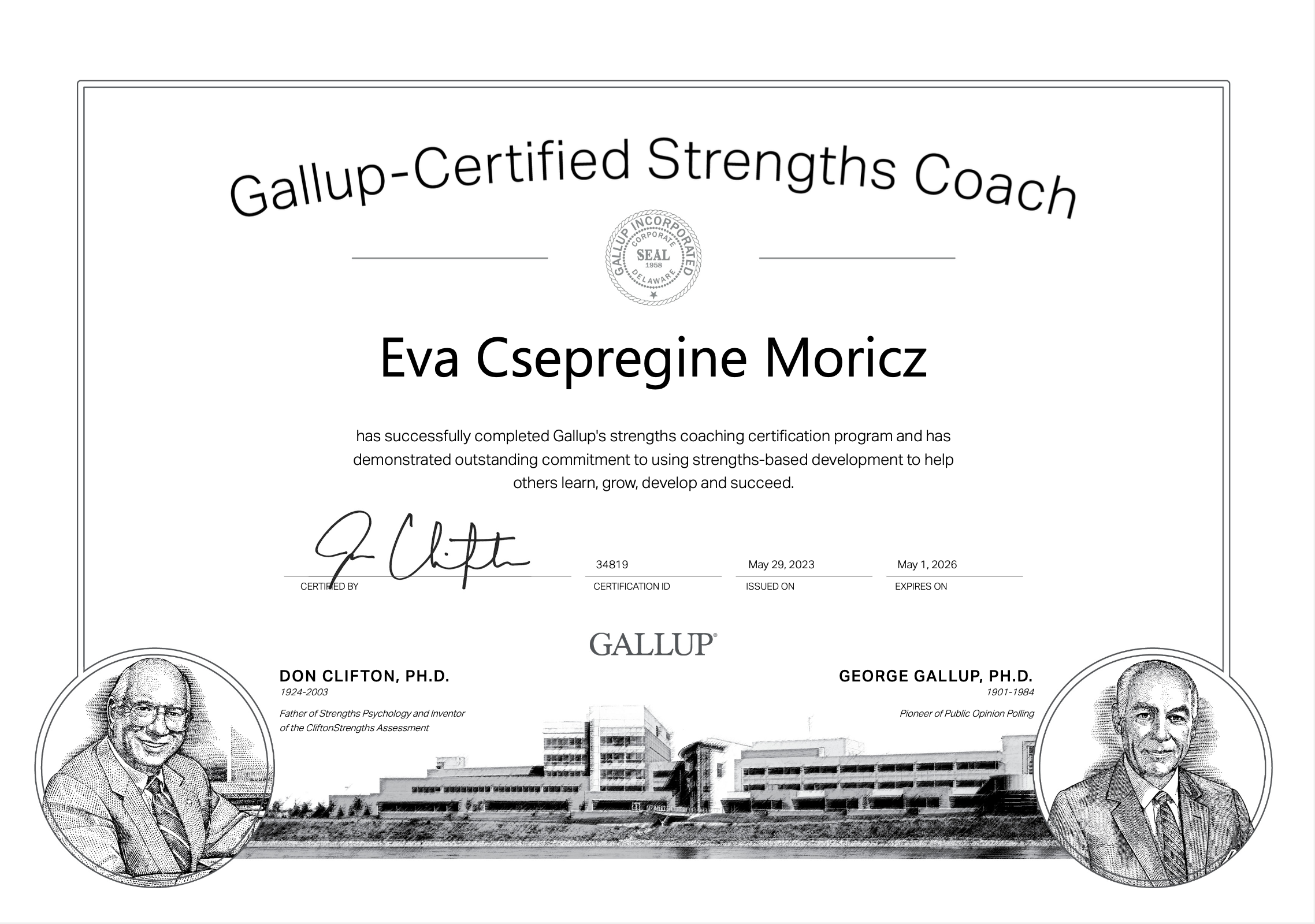
This is a big day for me; I’m officially a Gallup-Certified Strengths Coach! I used CliftonStrengths since 2020, but with this advanced course I received so many more resources and insights. Why is it amazing?
Because CliftonStrengths focuses on Strengths instead of weaknesses. And this attitude leads us to thrive, because we use those talents we’re naturally good at. If you want to lear more, please get in touch here.Screenshot 2023-05-30 at 19.19.56

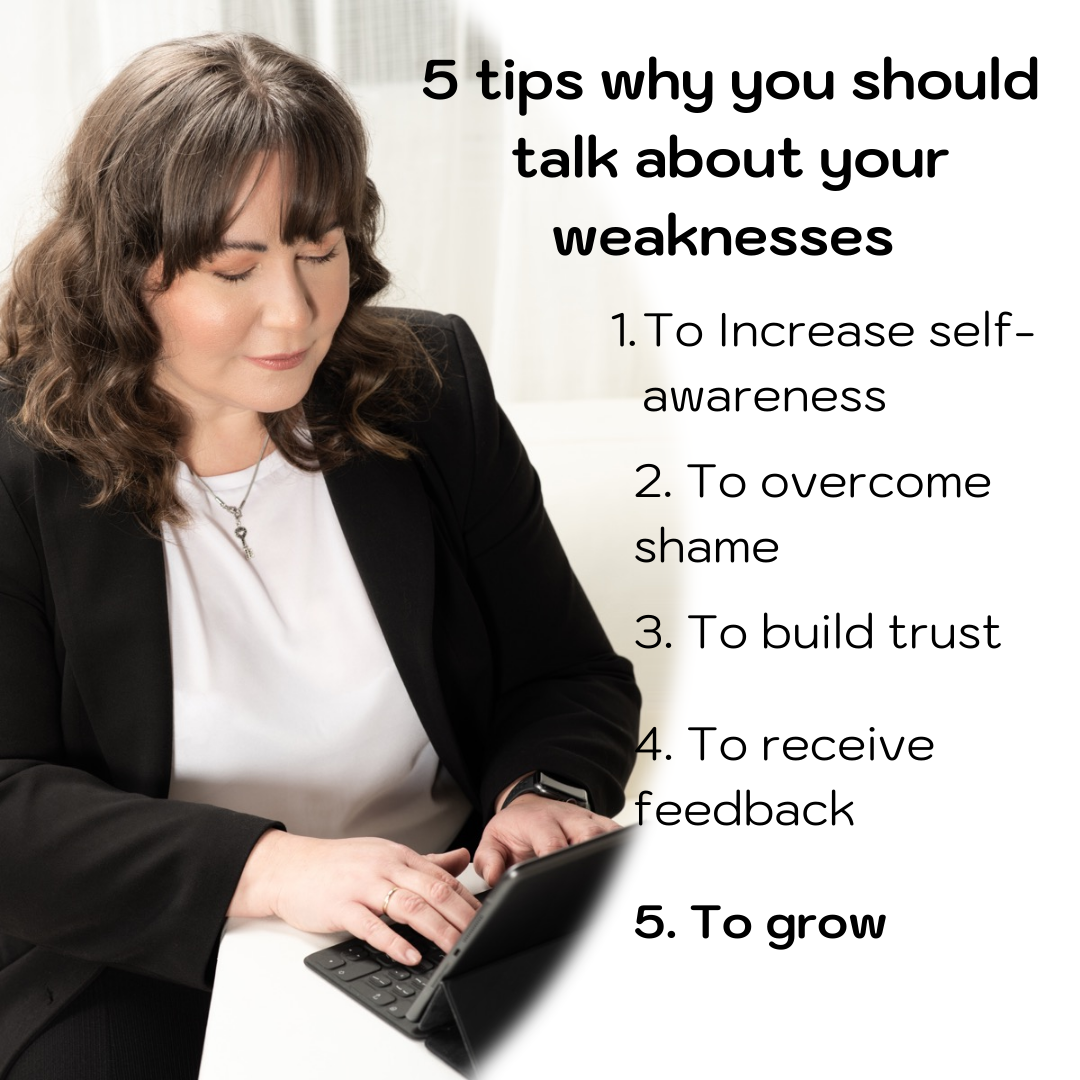
Why should we talk about our weaknesses Part 5 – Personal Growth

Talking about your weaknesses is a powerful step in personal growth and development. It allows you to create a roadmap for self-improvement, set goals, track progress, and ultimately become the best version of yourself.
When you talk about your weaknesses, you gain awareness of the areas in your life that require growth and improvement. This self-awareness is crucial because it provides the foundation for personal development. By acknowledging your weaknesses, you take an honest and introspective look at yourself, recognising the areas where you may be falling short or facing challenges.
5
Once you have identified your weaknesses, you can create a plan for personal growth. This plan involves setting specific goals that align with addressing and overcoming your weaknesses. These goals can be both short-term and long-term, providing you with a clear direction and purpose for your personal development journey.
You can seek guidance and support from others by talking about your weaknesses. This may involve seeking advice from mentors, coaches, or trusted friends who can offer insights and strategies for growth. Their perspectives and experiences can help you navigate challenges and provide a fresh perspective on your weaknesses. Having a support system is crucial in your growth journey as it keeps you accountable, motivated, and provides a sense of encouragement.
Tracking your progress is another vital aspect of personal growth. Regularly assessing and reflecting on your efforts and achievements can measure how far you have come in addressing your weaknesses. This tracking process helps you stay focused, celebrate small victories, and make necessary adjustments along the way. It allows you to see tangible evidence of your growth and reinforces your commitment to personal development.
Furthermore, talking about your weaknesses and actively working on them can boost your self-confidence and resilience. As you progress and overcome challenges, you develop a sense of accomplishment and belief in your ability to grow and improve. This newfound confidence spills over into other aspects of your life, empowering you to take on new challenges and opportunities with a positive mindset.
pexels-photo-11791008
Personal growth through addressing weaknesses also enhances your interpersonal skills and relationships. As you work on your weaknesses, you become more self-aware, empathetic, and open-minded. This enables you to build stronger connections with others, communicate more effectively, and handle conflicts in a constructive manner. Your personal growth positively impacts yourself and those around you, fostering healthier and more fulfilling relationships.
In conclusion, talking about your weaknesses is a catalyst for personal growth and development. By acknowledging your weaknesses and creating a roadmap for improvement, you set yourself on a path of self-discovery and self-improvement. Through goal-setting, seeking support, tracking progress, and building confidence, you become the best version of yourself. This personal growth journey not only enhances your individual well-being but also positively impacts your relationships and interactions with others. Embrace your weaknesses as opportunities for growth, and let them propel you towards a more fulfilling and meaningful life.

Why should we talk about our weaknesses Part 4 – To have feedback 

Receiving feedback is a valuable aspect of personal and professional growth. When you talk about your weaknesses and open yourself up to feedback from others, you invite a fresh perspective that can help you identify blind spots and areas of improvement that you may not have been aware of.

One of the key benefits of receiving feedback is gaining insights into blind spots. Blindspots are aspects of ourselves that we are unaware of or overlook. They can include biases, patterns of behaviour, or blind spots in our thinking. Feedback from others can provide valuable information about these blindspots, offering a different viewpoint and shedding light on areas that require attention.

Often, we have limited self-awareness, and our perception may be influenced by personal biases. Feedback from others acts as a reality check, allowing us to see ourselves more accurately. It helps to fill in the gaps in our understanding and highlights areas where we may need to make changes or improvements. By receiving feedback, we become more self-aware and gain a deeper understanding of how our weaknesses impact ourselves and others.

Constructive feedback can also provide specific areas for improvement that we may not have considered on our own. Others may observe behaviours, skills, or attitudes that hinder our growth or effectiveness. Their insights can be invaluable in guiding us towards necessary changes or development. By actively seeking feedback and being receptive to it, we open ourselves up to new possibilities for growth and improvement.

However, receiving feedback can sometimes be challenging. It can be uncomfortable to hear about our weaknesses or areas where we fall short. It is important to approach feedback with an open mind and a growth-oriented mindset. Instead of becoming defensive or dismissing the feedback, consider it as an opportunity for growth and self-improvement. Embrace feedback as a gift that helps you uncover blindspots and enhance your understanding of yourself.

No alt text provided for this image

To make the most of feedback, actively seek it from trusted sources who have a genuine interest in your growth and well-being. Look for individuals who can provide honest and constructive feedback, such as mentors, colleagues, or friends who have your best interests at heart. Creating a safe environment where feedback is welcomed and valued is essential for a healthy feedback exchange.

Receiving feedback also involves active listening and effective communication. Listen attentively to the feedback, seeking clarification if needed. Ask follow-up questions to gain a deeper understanding of the feedback provider’s perspective. It is important to acknowledge and appreciate the feedback, even if it is uncomfortable, as it demonstrates your openness and willingness to grow.

In conclusion, receiving feedback is a valuable process that helps us identify blindspots and areas of improvement. By talking about our weaknesses and being open to feedback, we gain valuable insights and perspectives that may not have been apparent to us. Receiving feedback requires a growth mindset, active listening, and effective communication. Embrace feedback as an opportunity for personal and professional growth, as it can guide us towards positive change and development.